
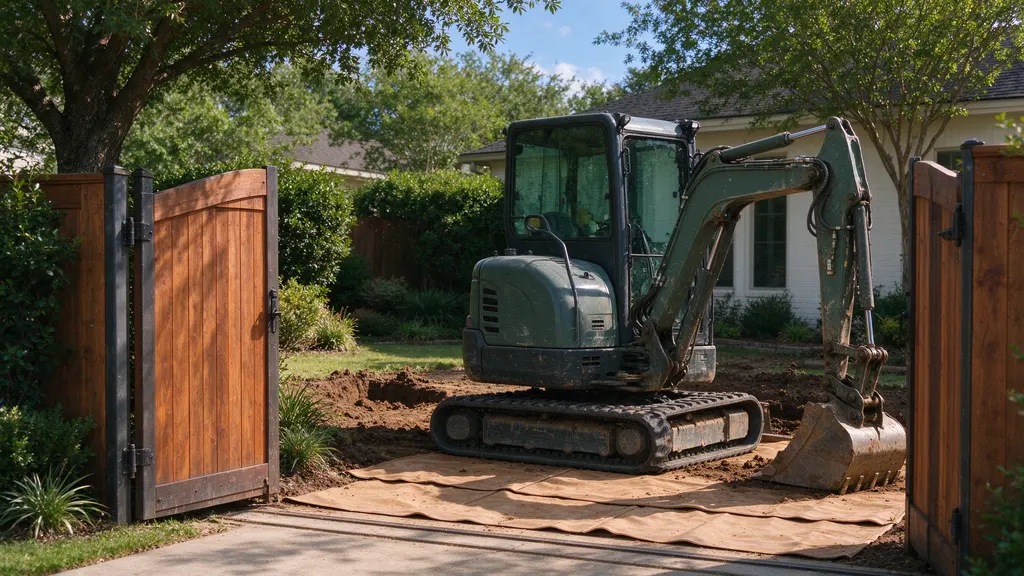
Measure the complete equipment route
Start at the point where equipment can be unloaded and follow the route to the work. Measure the narrowest opening, but also note corners, steps and overhead obstructions. A straight gate opening and a turn immediately behind it create different constraints. The operating area needs room for the actual work, not just the parked machine.
Our equipment access measurements guide helps organize the useful information. Send photographs looking in both directions along the route. Point out anything that cannot be moved, and do not assume vegetation or a structure will be removed to make room. Land clearing and demolition are outside our scope; access depending on those activities needs a separate resolution.
Machine dimensions and access
Mini excavator is a category, not one set of dimensions. Width, operating weight and working reach vary. Tail swing describes how the rear of the machine moves as it rotates; a compact rear profile does not remove the space required by the arm, bucket and work itself.
Equipment manufacturers publish these specifications because they affect selection. We match the proposed equipment to the task and route rather than promise access through a universal gate width. Our excavator, backhoe and skid-steer guide explains the different roles. A machine that passes through the entrance still needs the reach and working position necessary to excavate the supplied layout.
Route, bearing, turns and restoration
The route has to accommodate the proposed load and movement as well as the machine's width. Existing paving, soft areas and buried features can change the assessment. Photos and owner-provided records help identify what needs closer review; we do not assume a surface is adequate because a car normally parks there.
Protection measures must fit the actual operation. A protective covering does not create a blanket guarantee against rutting, cracking or other damage. Our equipment route protection article explains why the existing condition should be recorded and the restoration responsibility agreed. If a route cannot be used as proposed, we address the alternative before mobilization rather than changing it without authorization.
Have plans?
Let’s define the earthwork.
Soil must move through the same constrained site
Digging equipment and hauling equipment do not always follow the same route. Material may need to be transferred from the excavation to a loading point where a truck can reach it. That can require additional handling, staging space and coordination with the rest of the work.
Our dirt removal service defines the export portion. If material stays onsite, the placement area still needs to be suitable and included in the approved project. The cut and fill planning guide helps make that decision. We do not treat a narrow side yard as unlimited stockpile space or assume the owner is happy to keep excess soil once the excavation is complete.
What this work looks like
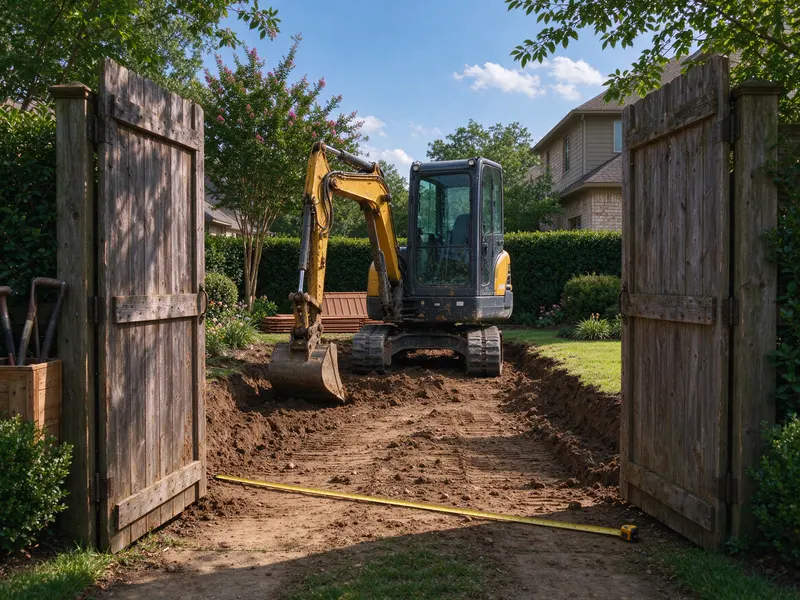
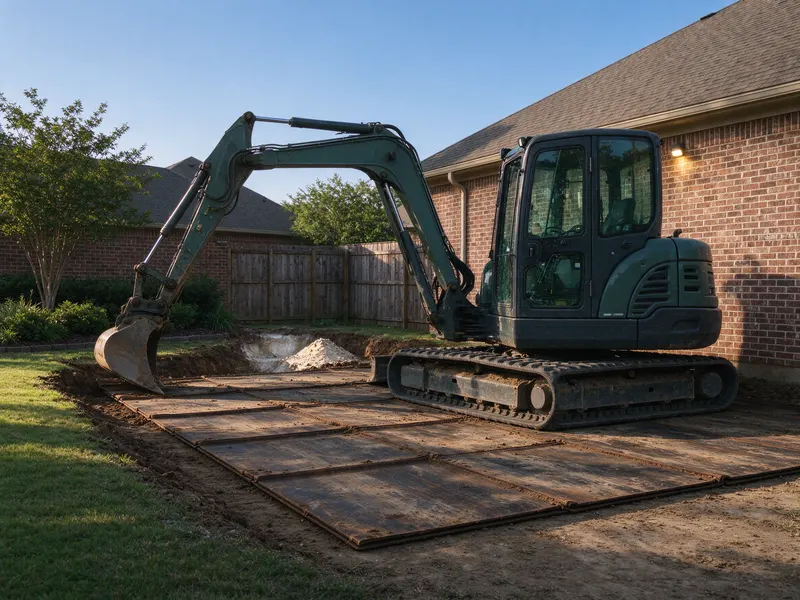
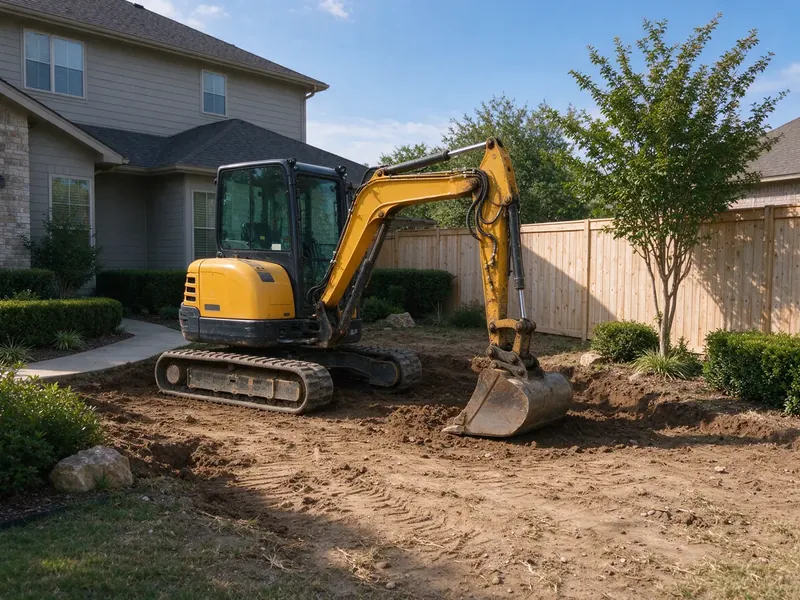
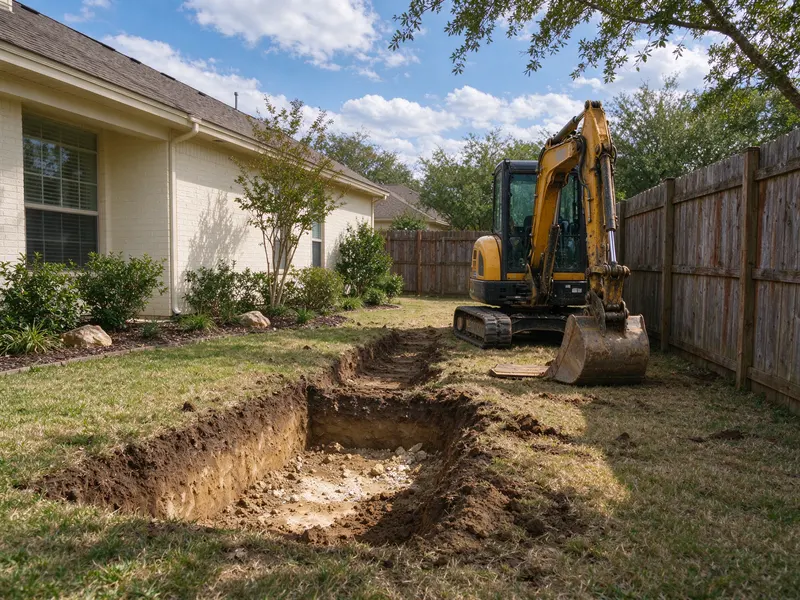
Existing foundations and utilities narrow the choices
Restricted work often takes place close to features that must remain. We need to know where the excavation sits relative to existing foundations and services. The responsible project team must establish the requirements for locating and protecting those features; being able to fit a bucket into the space is not permission to dig there.
Our guide to utility locates covers the information required before excavation. The guide to excavating near foundations explains why structural questions belong with the designer. We do not advertise a fixed safe distance that works for every foundation, soil or cut. Any required support or changed layout must be settled through the project's qualified decision-makers.
The first review follows the work in both directions
We review how equipment enters, where it works and how it gets back out after the excavation changes the ground. We also ask where deliveries can unload and what needs to remain accessible for the occupants. A route that works before digging may be interrupted by the completed cut.
Tell us about shared access, locked gates and any permission needed from another property owner. Our residential excavation service addresses occupied-home projects, while commercial excavation may involve a general contractor's site logistics plan. We need an authorized route rather than an informal assumption that a neighbor will allow access on the day equipment arrives.
Cost follows handling and constraints
A small excavation is not always a simple operation. Restricted access can affect equipment selection, loading and the sequence of material movement. We price the defined work rather than multiplying a large-machine production assumption by a smaller quantity.
The Frisco excavation cost guide explains the main price components. When comparing excavation quotes, identify whether extra handling, access protection and reinstatement are included. If a fence section or another removable feature needs attention, the scope must name the responsible party. Do not compare one bid that assumes open truck access with another that includes moving every load through a restricted passage; they describe different work.
Match the method to the required result
A pool excavation needs the builder's geometry. A foundation cut needs the supplied plans. A trench needs the installing trade's requirements. Access can influence the method, but it should not quietly change those endpoints. If the planned result cannot be reached with the available route, the project needs an explicit decision about access or design.
Our pool excavation and foundation excavation pages explain those handoffs. We do not promise that every job can be completed with a mini excavator or by hand. Where the constraints make the requested scope impractical, we explain what must change before a useful estimate can be finalized. The goal is a workable construction plan, not merely getting a machine through a gate.
What to send with a restricted-access inquiry
Provide the address, project description and available drawings. Include photographs of the unloading area, every turn and the proposed work space. State which features must remain and whether another trade needs the same route. Approximate dimensions help the discussion, but the agreed scope still needs the relevant site review.
Our project-readiness assessment organizes the unresolved decisions. Once the route, material movement and handoff are defined, we can identify what the earthwork proposal includes. Cleanup and restoration should be described as actual work, not an implied promise to leave every surface untouched. Request an estimate with the information you have, and we will identify the remaining access questions together.
Questions before the work.
Is there a minimum gate width for every excavation job?
No single width applies to all equipment and tasks. The proposed machine’s dimensions, the turns and the working space must be assessed together.
Does zero tail swing mean equipment cannot touch the house?
No. The arm, bucket and other moving parts still need clearance, and the route and operating position matter. A compact rear profile is one selection factor, not a damage guarantee.
Can excavation use my neighbor’s side yard?
Only with the required authorization and a workable agreed route. We do not assume access to another property as part of your estimate.
Will a small machine make the job cheaper?
Not necessarily. A smaller machine may solve an access constraint while requiring more material handling. The price depends on the complete operation and the required finished work.
Can you guarantee that access mats prevent all driveway damage?
No. Protection must be chosen for the route and loading, and existing surfaces need assessment. The proposal should define protection and restoration responsibilities without an unconditional no-damage promise.