
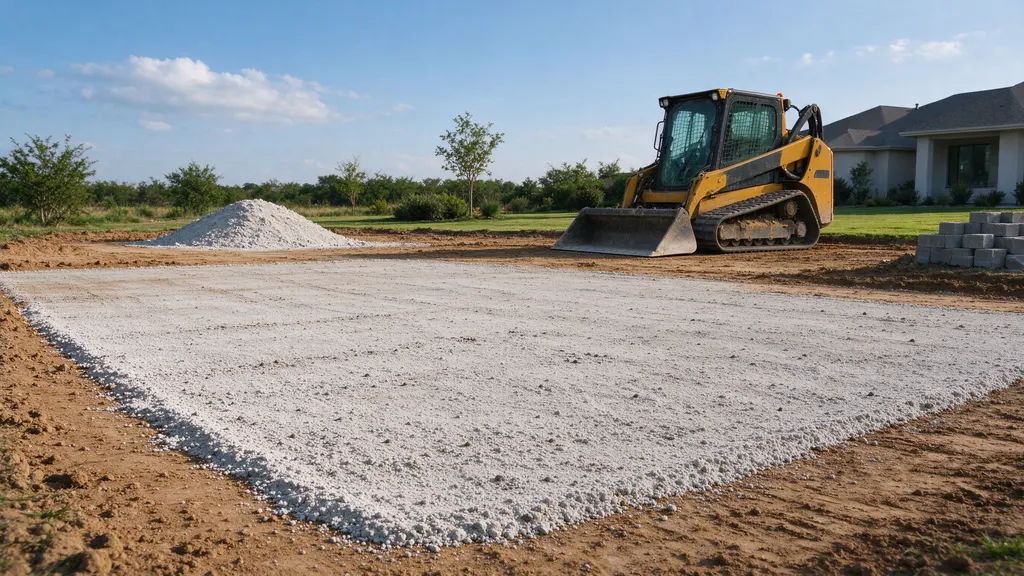
Choose fill for the intended use
The first question is what will be built or placed above the fill. A structural pad, a driveway subgrade and a landscape area do not necessarily call for the same material or acceptance standard. Tell us the intended use and send any soil report or project specification that controls the choice.
A supplier's description of clean fill does not establish structural suitability. Nor does the color of the soil. We need a material requirement tied to the project, with the responsible designer deciding questions that require engineering judgment. Our soil and fill guide explains those distinctions. We do not substitute a cheaper material simply because the approved type is harder to obtain.
Define the area and finished elevations
A fill request needs horizontal limits and a vertical target. Saying that an area should be raised does not tell us how it meets the ground around it. The plan should account for adjacent surfaces and the intended finished use. We review the supplied elevations rather than guessing a level from the nearest fence or doorway.
Our grading service addresses the shape of the earthwork, while fill placement addresses the material going into it. Where the project needs a designed grading plan, resolve that before deliveries begin. The guide to soil tests and grading plans explains what each document contributes and why an excavation estimate is not a substitute for design.
Prepare the receiving area before unloading
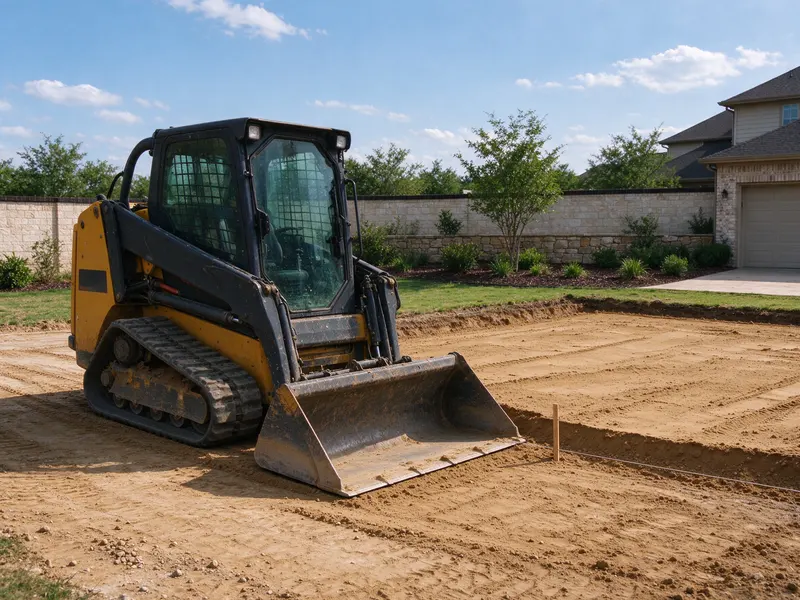
The site needs to be ready for the intended material. We review what is currently there, whether the project calls for removal and which party accepts the exposed surface before placement. Existing stockpiles, an unfinished excavation or work by another trade can prevent a delivery from being placed where the plan requires it.
Our site preparation guide helps identify these dependencies. Land clearing, tree removal and grubbing are outside our scope. If excluded preparatory work is required, it must be handled separately before the fill operation proceeds. We do not bury unwanted material or treat a truckload of fill as a way to conceal an unresolved condition underneath.
Have plans?
Let’s define the earthwork.
Delivery and placement are separate operations
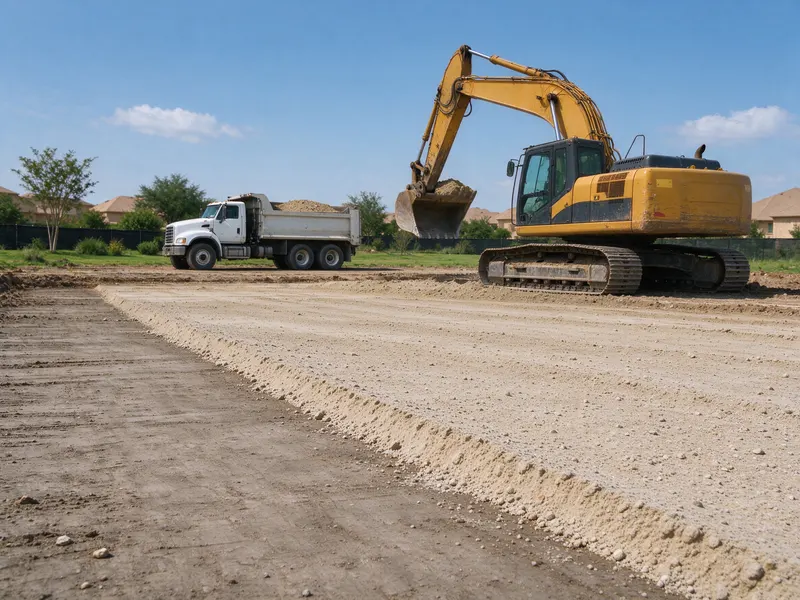
A truck may be able to reach the property without being able to unload at the placement area. The quote needs to account for unloading, temporary staging and any additional movement by equipment. A narrow route can turn a direct placement into several handling stages.
We check that arrangement through the access review. Our tight-access excavation page covers restricted routes, and the equipment access measurements guide identifies useful photos. If multiple loads are required, deliveries must fit the available space and placement sequence. Material should not be dumped into the only route the equipment needs to use. Waiting and rehandling are avoidable when the receiving plan is clear.
What this work looks like
Loose delivery quantity is not the finished fill volume
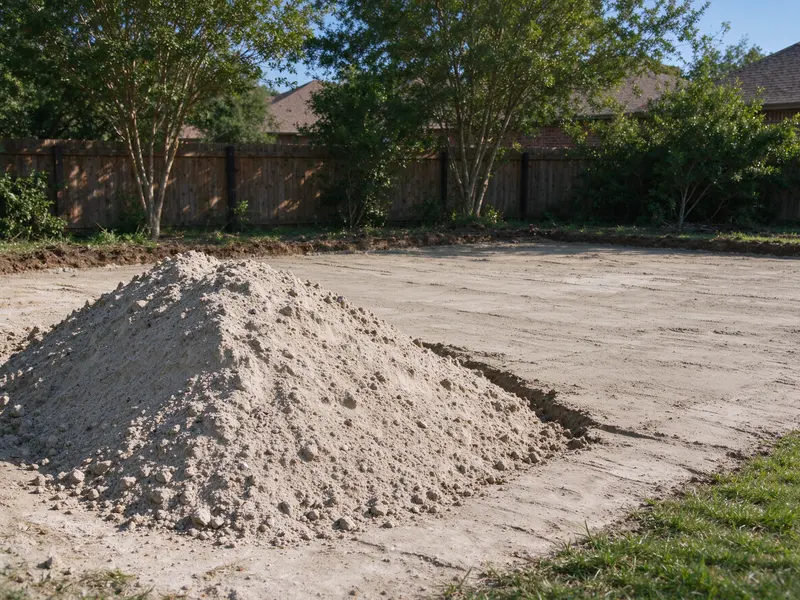
You may have a calculated void to fill and a supplier selling by loose cubic yard or load. Those are not automatically the same measurement. Placement changes the material's condition, and the amount needed depends on the project and material rather than one universal conversion factor.
Our guide to bank, loose and compacted cubic yards separates these terms. The excavation cost and volume estimator can organize geometric dimensions, but it does not invent a material conversion. Ask the supplier and project team how the delivery quantity is established. The proposal should also identify who authorizes more material if the measured receiving area differs from the initial plan.
Include compaction when the work requires it
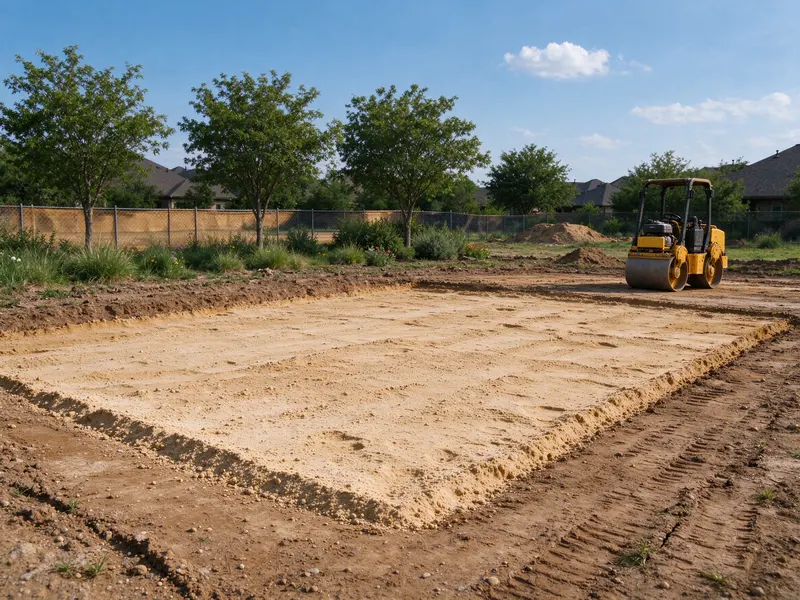
Placing material and compacting it are distinct operations. Where the project specifies compaction, the required material, placement method and acceptance checks need to be included. Simply dumping the whole quantity and leveling the surface does not establish that the supporting fill meets the design.
Our backfill and compaction service addresses that part of the work. FHWA explains that fill is compacted in layers because equipment has a limited effective depth; the actual method remains project-specific. If tests are required, identify who arranges them and who receives the results. A delivery receipt confirms material arrived, not that the completed fill passed a required acceptance test.
Existing material may be useful, but only for the right purpose
Before ordering imported fill, establish whether suitable material from another part of the project can be reused. That decision depends on its properties, condition and intended destination. Keeping soil onsite for the wrong purpose can create more work than exporting it and bringing in the specified material.
The cut and fill versus import and export guide explains this comparison. We can define an agreed placement scope using approved onsite material or imported fill. If unsuitable material needs to leave, dirt removal is a separate line to include. Avoid combining the two simply as a net number of loads; the loading and movement required for each operation still matters.
Frisco approvals and the written price
The City of Frisco's published grading guidance identifies dirt work as the activity authorized by a grading permit. It does not authorize utility construction. The applicable permit and plan requirements should be resolved for the property before the placement schedule is set.
We price the specified material handling and finished scope rather than advertising a universal price per yard. Our Frisco excavation cost guide explains the cost categories. The proposal should distinguish material supply, delivery, placement and any compaction or testing. It should also state how extra quantities and a rejected delivery are handled. Compare the same material specification and final elevation across bids, not just the lowest delivery total.
Finish with a usable placement record
At handoff, you need to know where material was placed and whether the required records are complete. For a structural application, the next trade may need testing information before proceeding. For another use, the agreement may call for a specific surface elevation or cleanup boundary. Define those endpoints before the first delivery.
Send the address, purpose of the fill and current plans when requesting an estimate. Include the approximate area and depth if available, plus access photographs. Our excavation project assessment can help organize missing information. We will discuss what can be priced now and which material or design decisions must be settled before the work is scheduled.
Questions before the work.
Can I buy fill myself and hire you to place it?
We can discuss placement of owner-supplied material. The specification, delivery timing and responsibility for unsuitable or excess material must be agreed before it arrives.
Is topsoil interchangeable with structural fill?
No. The material must suit its intended use. A landscaping material should not be substituted beneath a structure without the responsible designer establishing that it meets the requirements.
Can you estimate fill quantity from photos?
Photos help with access and context, but a useful quantity needs dimensions and elevations. The proposal should distinguish measured quantities from allowances awaiting field verification.
Does placement mean the fill has been tested?
No. Delivery, placement and testing are separate items. Where testing is required, the agreement needs to identify the testing agency and the acceptance records.
Can unwanted extra fill be spread around the property?
Only where that change is part of an acceptable, authorized scope. Do not assume excess material can be placed anywhere without affecting the required grades or project approvals.