
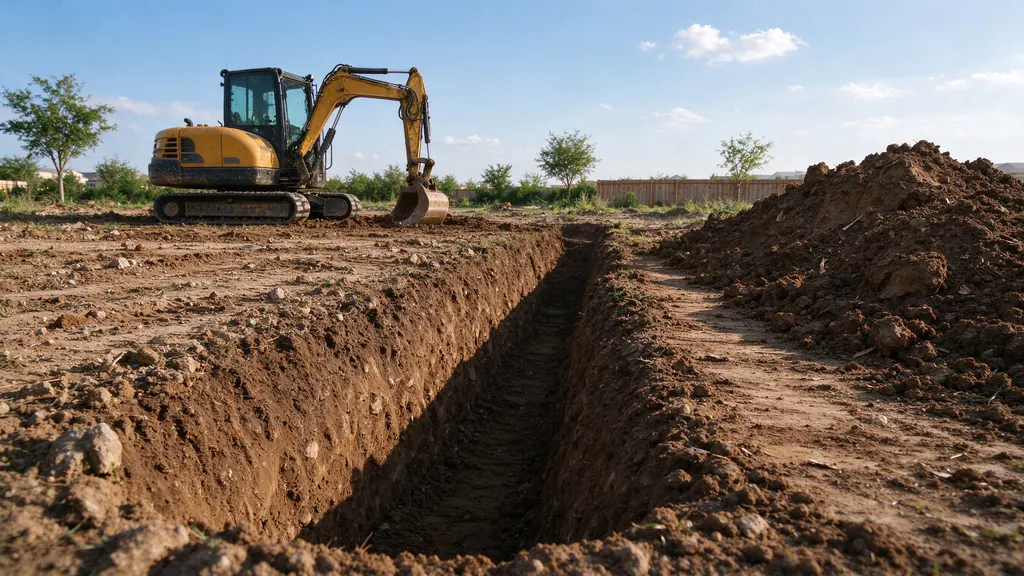
Match the trench to the installation plan
A route on a site sketch is only a starting point. We need the intended trench alignment, required excavation dimensions and the installer or designer's details for the bottom and surrounding material. The requirements may differ for water, sewer, electrical conduit or a drainage system. We do not choose a pipe grade, design a drainage outlet or infer the required cover from a generic project description.
Utility trenching is the excavation portion of that work. Pipe installation, repairs, connections, diagnostics and commissioning remain with the appropriate trade. Our excavation planning guide helps identify those boundaries before pricing. For sewer or drainage work, bring the installer's confirmed route and elevations rather than asking excavation to resolve an uncertain system problem. The trench should serve an established installation requirement, with a named person available to answer drawing or field questions.
Resolve existing services before the route opens
Before an excavation opens, the expected location of underground installations needs to be determined. As work approaches an installation's estimated location, OSHA calls for determining its exact location using means safe for employees. This is one reason we treat utility information as a planning requirement rather than an administrative box checked after machinery arrives. Our utility locate guide explains the information to assemble for that conversation.
Tell us about private services as well as the utilities you expect near the street. Irrigation, a power feed to an outbuilding or an older line shown only in property records may affect the work. A painted route and an owner's recollection answer different questions; neither should be used to dismiss an unresolved conflict. If the planned trench crosses an existing service, the scope needs to address that crossing before ordinary production digging reaches it. Unknown lines need investigation, not a guess based on color or apparent age.
Choose the method around the full working space
Open trenching needs space for the machine, excavated soil and the installation sequence. The width of the final trench is not the width of the overall operation. We review the ground beside the route, access along it and any obstacles that interrupt equipment movement. The equipment access guide helps you record gate openings, turns and other constraints that can affect the method.
Trenching equipment is selected for the route, ground conditions and project requirements. A small machine does not automatically solve every narrow access problem, particularly when material has to be moved away from the trench. Tight-access excavation may involve additional handling or a different sequence. Directional drilling is a separate method and is not offered as part of this service. If an open route would conflict with a structure, pavement or another restriction, the installer and project team need to resolve the method rather than assuming a trench can pass through unchanged.
Have plans?
Let’s define the earthwork.
Plan worker protection as part of the excavation
Trench conditions need assessment by the responsible competent person. OSHA's guidance connects excavation work with hazard recognition, inspections and protective-system decisions. The appropriate approach depends on the actual conditions; a photograph, a shallow-looking cut or a particular machine does not establish that entry is safe. Our trench safety guide explains the planning issues without providing a substitute design for a specific excavation.
Sloping, shoring and shielding are different approaches, and their suitability cannot be chosen from a marketing description. Water, nearby structures, surrounding loads and the available work area can affect the protective arrangement. We need the installation sequence to account for that arrangement rather than treating worker access as something to improvise after digging. The public work boundary also matters. Tell us about occupied buildings, deliveries and pedestrian routes so the project can plan separation around the open work.
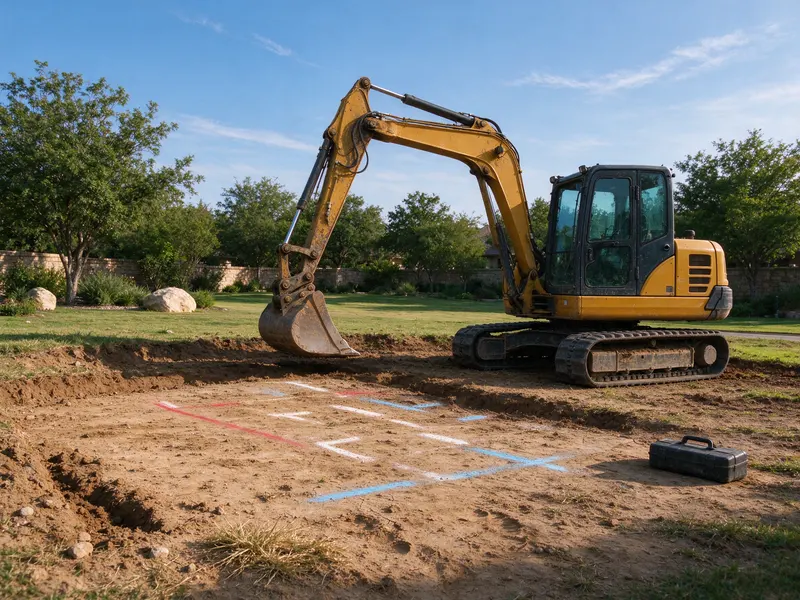
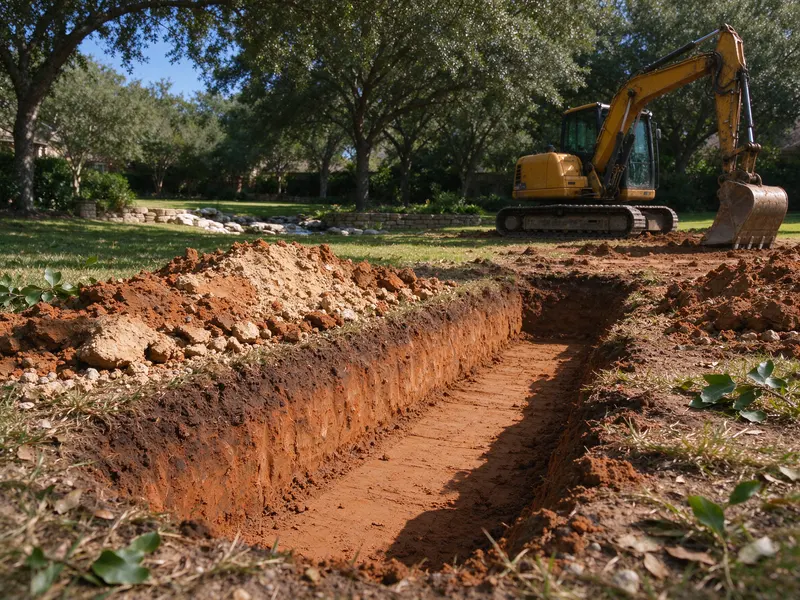
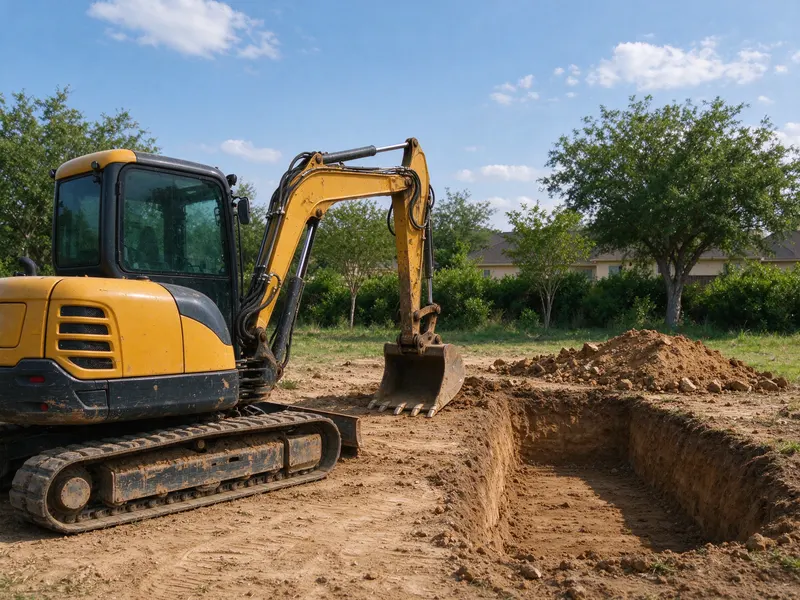
What this work looks like
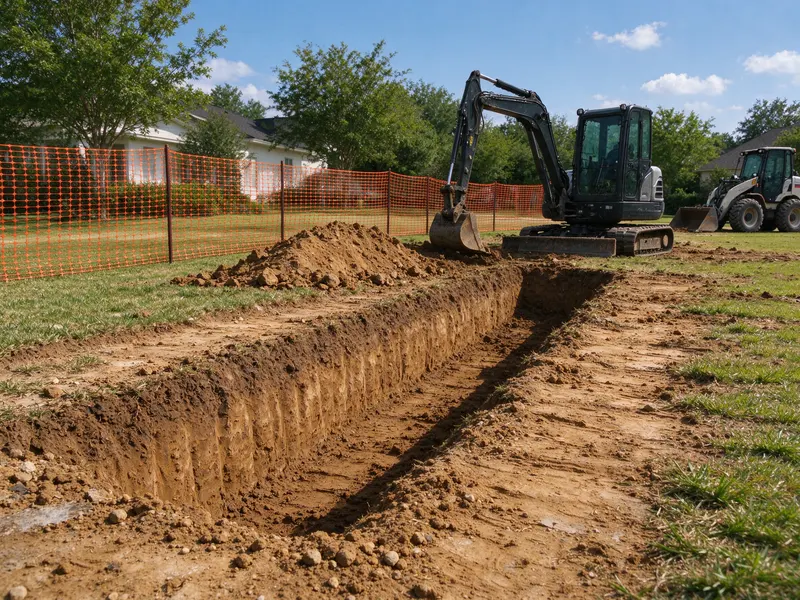
Coordinate bedding, installation and backfill
The installation contractor's requirements determine what they need to receive at the trench bottom. Identify who supplies and places bedding, who installs the utility and who authorizes covering it. We can define earthwork responsibilities around that sequence, but excavation does not include approval of a utility installation. A delay in the installer's work or required review can affect when the excavation phase is ready to close.
Backfill and compaction should specify the material and placement requirements for the receiving location. A trench below future paving may have different project requirements from a landscape area. The soil and compaction guide explains why the final use matters. If excavated material cannot be reused, dirt removal and imported fill placement become separate parts of the scope. Specify whether final grading is included and which contractor restores pavement, irrigation or landscape finishes afterward.
Divide a route into workable installation sections
A long route does not always need to be treated as a single uninterrupted operation. The installer may need access to particular sections in order, or a driveway crossing may affect when one area can be opened. We discuss those constraints before deciding how excavation and installation will progress. The plan should account for the space needed by both contractors, material delivery and the point at which completed sections can be released for the next earthwork stage.
A return for backfill is a separate scheduling event when installation cannot immediately follow excavation. Identify who communicates that the section is ready and what information accompanies that release. If different portions have different material requirements, show the limits clearly instead of relying on a single general backfill note. At the end of the route, tie the excavation limits to the installation contractor's defined connection area. An unfinished or uncertain endpoint can change both the final cut and the sequence needed to close the work.
Price the route, its interruptions and the return work
A length alone is not enough to define a trenching price. Width, depth, route changes, access, existing-service crossings, material handling and the installation schedule all affect the work. A route with several interrupted sections may have a different sequence from one continuous open work area. Our excavation cost guide explains cost drivers without treating a general hourly or cubic-yard figure as a guaranteed trenching rate.
Identify any areas that must remain open for vehicles or occupants and whether work can proceed in phases. Also define the response to rock, buried obstacles or water. The buried obstacles guide and rain planning guide explain why changed conditions need an agreed decision path. When comparing trenching quotes, look for the same excavation limits, bedding responsibilities, removal allowances and backfill scope. Send the route drawing, installation details, known utility information and access photos so we can review the complete earthwork package.
Questions before the work.
Can you excavate a route chosen by my plumber?
We can review excavation to the plumber’s defined route and installation requirements. Provide the alignment, dimensions and any necessary elevation details. The plumber remains responsible for the system work; our scope should identify the condition they need before installation and who releases the trench for backfill.
Do you diagnose sewer problems before trenching?
No. Sewer diagnostics and repair design belong to the appropriate specialist. Confirm the problem, repair location and installation requirements before requesting excavation pricing. Digging along an uncertain route is not a substitute for identifying which system component needs work.
Can a trench be priced by length alone?
Length helps establish the route, but it does not describe width, depth, access or crossings. Those factors change the excavation and handling requirements. Supply the installation detail and site constraints so the quote describes the actual work rather than an incomplete linear-foot allowance.
Who decides when an installed utility can be covered?
That responsibility should be assigned before excavation begins. The installer and any required reviewer need to release the work at the appropriate stage. We coordinate the backfill scope around that release rather than assuming that a pipe or conduit in the ground is ready to cover.
Can you bore underneath a driveway instead of opening it?
Directional drilling and boring are not included in our trench excavation service. If the route cannot be opened, the project team needs to establish an appropriate alternative with a qualified provider. We can review the excavation portion only after its limits and interfaces are defined.